Finding the right Fitness professionals and Physical therapists
Cette section contient des liens d'affiliation/This post contains affiliate links. Consulter la divulgation ICI/Read the full disclosure HERE.
Finding the right physical therapist or specialized fitness professional can be the cornerstone of your progress, turning what seems impossible into an empowering reality.
Navigating the path to optimal health and well-being, especially when faced with unique physical challenges, can feel like a labyrinth. You might be recovering from an injury, managing a chronic condition, or living with a physical disability, and the need for movement and strength remains paramount. The good news? You don’t have to embark on this journey alone.
Consider this: The World Health Organization reports that over 1.3 billion people, or about 16% of the global population, experience a significant disability, many of whom could benefit immensely from tailored physical activity. And the Centers for Disease Control and Prevention (CDC) notes that roughly half of all adults in the U.S. have one or more chronic health conditions, many of which are significantly improved through proper exercise and rehabilitation. These statistics underscore a vital truth: specialized physical guidance isn’t a luxury; it’s a necessity for millions.
This article is your comprehensive guide to finding that pivotal expert – whether a physical therapist with advanced certifications or a specialized fitness professional – who can accompany you on your unique health journey. You have the power to transform your physical landscape, and it all begins with making informed choices.
I. Identifying Your Specialized Fitness Needs
I remember my own journey after a particularly stubborn wrist injury. Initial physical therapy helped me regain basic function, but I was still hesitant, fearing re-injury and unsure how to return to my active lifestyle without pain.
I knew I needed more than just general fitness advice; I needed someone who understood the intricacies of my wrist, the biomechanics and how to build strength safely around my former injury.
It was in seeking this specialized guidance that I truly began to thrive, not just recover. The search for that person felt daunting at first, but it taught me invaluable lessons about what to look for and the profound impact the right professional can have.
Before you even begin your search, it’s crucial to understand what you need. Your journey is unique, and so are the demands it places on a professional.
- Physical Disabilities: If you live with a physical disability, your needs might involve improving mobility, increasing strength for daily tasks, managing spasticity, or adapting exercises to suit limited range of motion or assistive devices. You’ll need someone who comprehends the nuances of your specific condition and can create an inclusive and empowering environment.
- Chronic Conditions: Conditions like arthritis, diabetes, fibromyalgia, heart disease, or multiple sclerosis require a nuanced approach to exercise. The right professional will understand how exercise impacts your condition, how to manage energy levels, prevent flare-ups, and ensure safety while still promoting significant health improvements.
- Injuries and Rehabilitation: If you’re post-surgery, recovering from an acute injury, or dealing with persistent pain, your primary goal is safe, effective rehabilitation and gradual return to function. This phase often bridges directly from clinical physical therapy into sustained functional fitness, requiring a professional who can continue to guide your strength, mobility, and injury prevention strategies.
Understanding your specific needs will help you articulate your goals clearly and find a professional whose expertise aligns perfectly with your objectives.
II. Finding Professionals with Specialized Certifications
General certifications are a good start, but for specialized needs, you need someone who has gone the extra mile. Look for credentials that indicate advanced knowledge in specific areas.
- Adaptive Fitness: Professionals with adaptive fitness certifications are trained to work with individuals with disabilities. They understand how to modify exercises, use adaptive equipment, and create inclusive programs that cater to diverse abilities.
- Corrective Exercise: A corrective exercise specialist can identify muscular imbalances and postural deviations that contribute to pain or injury. They design programs to correct these issues, improving movement patterns and reducing the risk of future problems. This is particularly valuable for chronic pain and post-rehab individuals.
- Medical Exercise: Medical exercise specialists (MES) are trained to work with individuals who have medical conditions, helping them manage their conditions through safe and effective exercise. They often collaborate closely with physicians and physical therapists, acting as a bridge between clinical care and independent fitness. A physical therapist with advanced skills might also hold these credentials or equivalent specialized training.
When evaluating potential professionals, don’t hesitate to ask about their specific certifications and how they apply to your condition.
III. Evaluating Experience and Training
Certifications are foundational, but practical experience offers invaluable depth of understanding.
- Understanding Specific Conditions: Has the professional worked with clients who share your specific diagnosis? Ask for examples of how they’ve helped similar clients achieve their goals. A professional with experience in your specific condition will be more attuned to potential challenges and effective strategies.
- Developing Tailored Programs: Cookie-cutter programs simply won’t suffice for specialized needs. The right professional will emphasize a highly individualized approach, taking into account your current capabilities, limitations, and long-term aspirations. They should be able to explain their process for program design and how they will adapt it over time.
- Injury Prevention Strategies: Beyond just recovery or management, a truly skilled professional will integrate proactive injury prevention into your program. This includes educating you on proper form, progression, and listening to your body’s signals to avoid setbacks.
IV. Assessing Accessibility and Equipment
Your ability to consistently attend sessions and perform exercises safely is paramount.
- Adaptive Equipment: Does the facility have the necessary adaptive equipment, such as accessible cardio machines, specialized weight machines, or assistive devices that cater to your needs?
- Ramps and Elevators: Ensure the facility itself is physically accessible. This includes ramps, elevators, spacious doorways, and accessible restrooms.
- Inclusive Environment: Beyond physical accessibility, assess the overall atmosphere. Do you feel welcomed and supported? A truly inclusive environment fosters confidence and ensures you feel comfortable and respected throughout your journey.
V. Communication and Collaboration with Healthcare Providers
For specialized needs, your fitness journey is rarely a standalone endeavor; it’s part of a larger healthcare ecosystem.
- Working with Doctors and Therapists: The ideal professional will actively communicate and collaborate with your doctors, physical therapists, or other specialists. This ensures a cohesive approach to your care, preventing contradictory advice and optimizing your progress.
- Sharing Progress and Concerns: They should be open to receiving updates from your medical team and ready to share your exercise progress. This ongoing dialogue ensures your program remains safe and effective as your condition evolves.
- Adjusting Training Plans: Be sure your chosen professional is flexible and willing to adjust your training plan based on new medical information, pain levels, or changes in your condition.
VI. Addressing Safety Concerns and Risk Management
Your safety is non-negotiable, especially when dealing with specific health conditions or post-injury.
- Emergency Protocols: Inquire about their emergency protocols. What happens if you experience a health emergency during a session? Are they CPR and First Aid certified?
- Monitoring Vital Signs: For certain conditions, monitoring vital signs (like heart rate or blood pressure) is crucial. Ensure they are equipped and knowledgeable to monitor these as needed.
- Safe Exercise Techniques: They should be meticulous about teaching and reinforcing safe exercise techniques, ensuring you perform movements correctly to maximize benefits and minimize risk.
VII. Setting Realistic Goals and Expectations
The journey to better health is a marathon, not a sprint. The right professional will help you embrace this truth.
- Gradual Progression: Success lies in gradual, sustainable progress. A good professional will design a program that builds progressively, avoiding overexertion and burnout.
- Celebrating Small Victories: You’ll find immense motivation when you and your professional acknowledge and celebrate every milestone, no matter how small. These small victories build momentum and reinforce your commitment.
- Maintaining a Positive Mindset: A true guide will not only focus on your physical capabilities but also support your mental and emotional well-being, fostering a resilient and optimistic outlook on your health journey.
VIII. Personal Stories and Success Stories
Hearing about others who have overcome similar challenges can be incredibly powerful.
- Inspiring Examples: Ask if the professional can share anonymized success stories or testimonials from clients with similar conditions. These stories can be a powerful source of motivation and proof of concept.
- Demonstrating Possibilities: Seeing what others have achieved showcases the possibilities for your own journey. It transforms abstract goals into tangible successes.
- Fostering Hope: In moments of doubt, knowing that others have walked a similar path and emerged stronger can foster profound hope and determination.
- Navigating Your Choices: General vs. Specialized Professionals
To help you distinguish between different types of support, here’s a comparison:
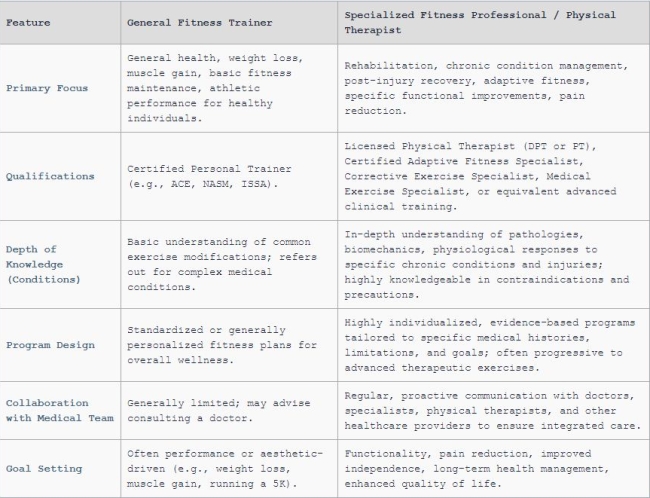
Your journey toward improved health and fitness, especially when facing specialized needs, is a testament to your strength and determination. Finding the right physical therapist or specialized fitness professional is not just about locating someone with the right credentials; it’s about finding a true partner in your well-being. This individual will be your guide, your motivator, and your advocate, helping you navigate challenges and celebrate triumphs.
Remember, you deserve personalized, expert care that respects your unique body and circumstances. Take the time to research, ask questions, and trust your instincts. The proactive steps you take today will lay the groundwork for a stronger, more vibrant tomorrow. Don’t let uncertainty hold you back from achieving your fullest potential.
Ready to take that transformative step and connect with a professional who truly understands your needs? Your journey to empowerment and lasting well-being is just a click away!